 Skip-the-line available
 What to See in the Vasari Corridor
The windows over the Arno, the marble inscriptions and busts, the Ponte Vecchio views and the memorials — a concierge guide to what the reopened Corridor holds.
Since its December 2024 reopening, the Vasari Corridor is experienced as a walk through the historic passage itself rather than as the self-portrait gallery it once was — those paintings now hang in the main Uffizi Galleries. The reopened route offers the panoramic windows over the Arno at the Ponte Vecchio, the balcony over the church of Santa Felicita, a display of ancient Greek and Roman marble inscriptions, a series of Greco-Roman portrait busts, and memorial spaces recalling the passage's damaged twentieth-century history. This guide walks through what to look for along the roughly one-kilometre route, from the views out over Florence to the architecture of the passage, so you know what the reopened Corridor actually holds before you visit.
What are the highlights of the Vasari Corridor?
The single greatest highlight of the Vasari Corridor is the experience of the passage itself: an enclosed, roughly one-kilometre walkway drawn straight through the heart of Florence, over the top of the Ponte Vecchio and above the rooftops of the Oltrarno. Since the 2024 reopening the emphasis is on this walk rather than on paintings, so the things to look for are the windows framing the Arno, the run of panoramic openings at the Ponte Vecchio, the detour around the Torre dei Mannelli, the balcony over the church of Santa Felicita, and the displays of ancient marble inscriptions and Greco-Roman busts arranged along the route. Together these give a sense of both the Medici's private world and the deep antiquity the family collected. These features together turn the roughly one-kilometre walk into a compressed tour of Medici ambition, from the panoramic windows to the collected antiquities.
What makes the Corridor unforgettable is the vantage point. For most of its length you are walking above the city, looking out through windows that ordinary Florentines never had access to for centuries, seeing the Arno, the bridges and the medieval streets from the raised private line the Medici built for themselves. The self-portrait collection that was once the headline attraction is no longer here — it has moved into the Uffizi — so approach the Corridor expecting an architectural and historical experience rather than a picture gallery. Our concierge recommendation is to walk slowly and spend your attention on the windows and the structure; the views out over Florence from the middle of the Ponte Vecchio are the moment most visitors remember. Arriving with that expectation, of a walk through history rather than a hang of paintings, is the single most useful piece of preparation for the reopened Corridor.
What are the windows over the Ponte Vecchio?
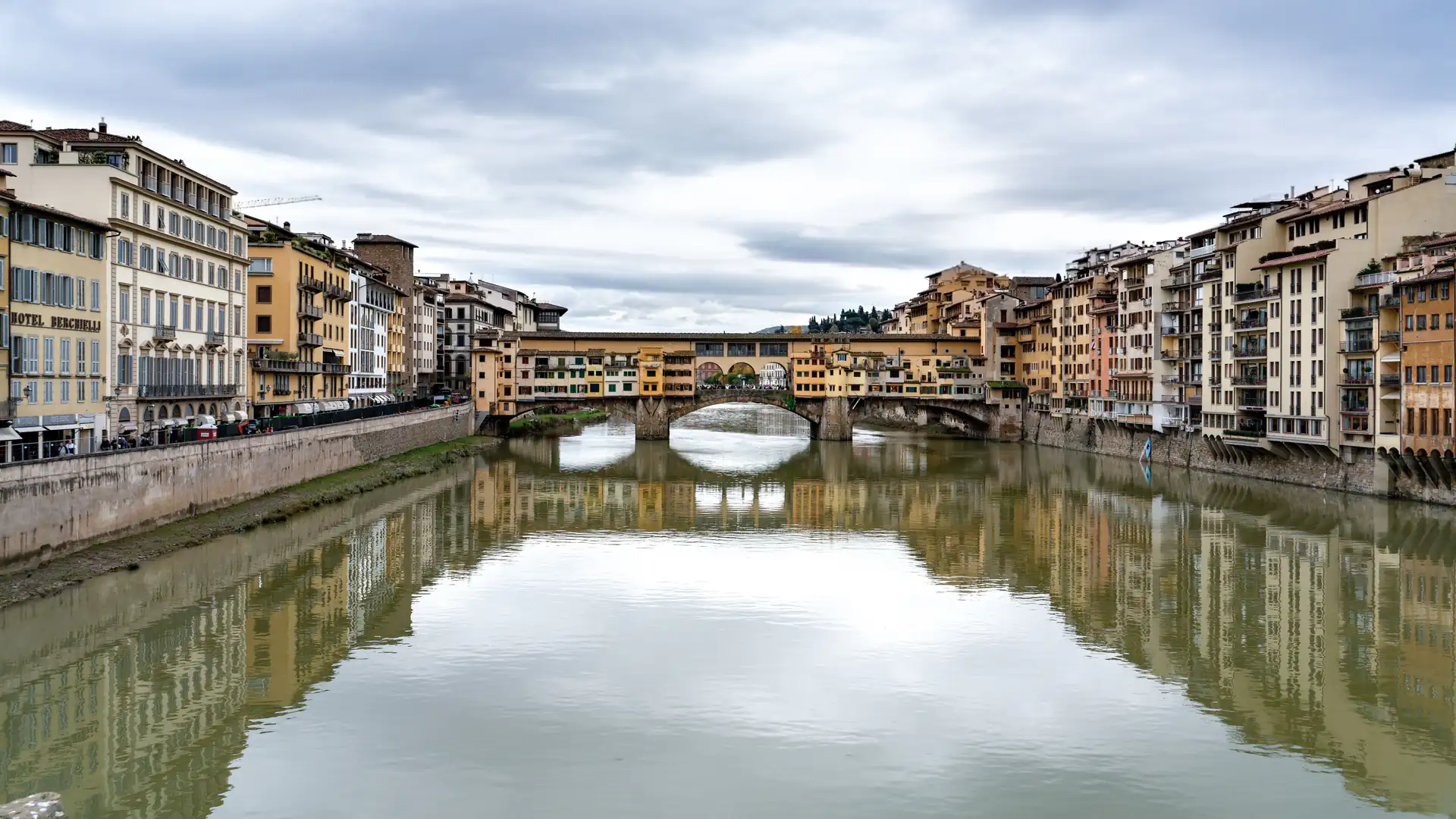
At the point where the Corridor crosses the Arno on top of the Ponte Vecchio, it opens into a series of panoramic windows facing the river toward the Ponte Santa Trinita. These are among the most memorable features of the entire route, giving a broad view up and down the Arno from a position no ordinary visitor to the bridge below can reach. The windows were part of Vasari's original design intent to light the passage and to give the Medici views of the river and city as they crossed, and they remain the defining moment of the walk. Standing at these openings, you look out over the same water and rooftops the Grand Dukes did in the 16th century. These windows over the Ponte Vecchio are, for most visitors, the defining image of the entire Corridor and the moment they most want to photograph.
Beyond the Ponte Vecchio the Corridor is pierced with other decorative windows that Vasari added along its length to provide changing views of the river and the surrounding city. The effect is that the walk is not a dark tunnel but a lit passage that constantly frames Florence from above, revealing the Arno, the bridges and the tightly packed Oltrarno houses through a sequence of openings. This interplay of enclosed walkway and framed views is central to what the reopened Corridor offers, and it is why the structure itself, rather than any single object inside it, is the main thing to see. Our concierge recommendation is to pause at the Ponte Vecchio windows in particular, as they offer the classic panorama that defines the Corridor experience. No object inside the passage rivals the windows for impact, which is why the reopened Corridor is best approached as an architectural experience above all.
What ancient sculptures and inscriptions are on display?
Along the reopened route the Uffizi has arranged a display of ancient Greek and Roman marble inscriptions drawn from the grand-ducal epigraphic collection — carved stones that record dedications, names and events from the classical world, assembled by the Medici and their successors over the centuries. Set into the passage, they turn the walk into a quiet gallery of antiquity, connecting the 16th-century structure to the far older Roman and Greek past the Florentine dukes so eagerly collected. The inscriptions are worth slowing down for, as they are easy to walk past but represent one of the notable historic collections now shown in the Corridor. They also underline how the Corridor now presents the Medici as collectors of the ancient world, not only as patrons of the Renaissance painters whose self-portraits once hung here. Pausing at the inscriptions gives the walk a slower, more contemplative rhythm than the crowded galleries you have just left behind.
Alongside the inscriptions, a series of Greco-Roman portrait busts is placed along the stretch of the Corridor suspended over the city. These marble heads — Roman and Greek portraits from the grand-ducal antiquities holdings — line parts of the raised passage, so that you walk between ancient faces while looking out over modern Florence through the windows. The pairing of classical sculpture with the panoramic views is very much in the spirit of the Medici, who saw themselves as heirs to the classical world. Our concierge recommendation is to treat the inscriptions and busts as the reopened Corridor's collection to notice — no longer the self-portraits, which now hang in the Uffizi galleries, but this quieter display of antiquity arranged along the walk. Look for the busts in the stretch that runs highest above the streets, where the classical faces sit against the framed views of the city.
What memorials will I see in the Corridor?
The reopened Corridor incorporates memorial spaces that acknowledge the hardest chapters of its history, and they are among the most affecting things to see. The section of the passage closest to the Uffizi entrance was heavily damaged by the Via dei Georgofili bombing on the night of 27 May 1993, a Mafia car-bomb attack near the gallery that killed five people. Several artworks were badly damaged in that attack; some have since been pieced back together and returned to their original positions specifically to serve as a lasting reminder of the event. Encountering this near the start of the walk sets a reflective tone that stays with many visitors through the rest of the passage. The deliberate decision to leave the damaged works visible, rather than hide the scars, makes this one of the most quietly powerful parts of the whole route.
The Corridor's twentieth-century wounds go back further than 1993. The structure was damaged in the 1943 bombing of Florence during the Second World War and again in the catastrophic 1966 flood of the Arno, which swept through the low-lying centre and required extensive restoration before the passage could reopen to the public in 1974. Walking the route today, you are moving through a structure that has survived war, flood and terrorism as well as more than four centuries of Florentine history. Our concierge recommendation is to read the memorial spaces rather than hurry past them; they are a large part of why the quiet, restored Corridor carries a weight beyond its Renaissance origins and its views over the city. That long record of survival is precisely why the calm, restored passage feels weighted with more than its Renaissance beginnings, and why the memorials repay a slow, attentive walk rather than a quick pass.
Is the Vasari Corridor accessible, and what should I expect?
The Vasari Corridor was rebuilt during its restoration to be far more accessible than the old passage, and modern visiting arrangements were part of the reason the reopening took so long. Practically, expect a one-directional walk of roughly a kilometre that begins inside the Uffizi and ends across the Arno near the Palazzo Pitti; once you start along the Corridor you cannot turn back into the gallery. The passage is entirely covered, so it is comfortable in any weather, and the pace is set by your small timed group. Visitors with specific access needs should confirm the current arrangements with the official Uffizi visitor information before travelling, as facilities along the route have been modernised. Planning for a one-way route that ends on the far side of the river, rather than a loop back to the Uffizi, is the key thing to understand before you set out.
In terms of what to expect from the visit as a whole, treat the Corridor as the climax of a longer day at the Uffizi rather than a quick add-on. You tour the gallery first, then walk the passage, emerging on the Oltrarno side near the Boboli Gardens. Photography of the views is one of the pleasures of the walk, though visitors should follow any on-site guidance about where and how images may be taken. Because the group is small and the route is fixed, the experience is unhurried and intimate compared with the crowded galleries. Our concierge recommendation is to allow a comfortable margin before your slot, wear good walking shoes, and give yourself time to appreciate the windows, the antiquities and the memorials along the way. Approached that way, the Corridor becomes the memorable finale of a Florence day rather than a rushed extra tacked onto a gallery visit.
Frequently asked
What is there to see in the Vasari Corridor?
The main things to see are the passage itself and its windows over the Arno and Ponte Vecchio, plus a display of ancient marble inscriptions, Greco-Roman portrait busts, the balcony over Santa Felicita, and memorial spaces recalling the Corridor's damaged 20th-century history.
Can you still see the self-portraits in the Vasari Corridor?
No. The famous self-portrait collection was moved into dedicated rooms inside the main Uffizi Galleries during the restoration. The reopened Corridor is experienced as a walk through the structure, with inscriptions and busts rather than the self-portraits.
What are the Ponte Vecchio windows?
Where the Corridor crosses the Arno on top of the Ponte Vecchio, it opens into a series of panoramic windows facing the river toward the Ponte Santa Trinita. They are the defining feature of the walk, giving views no ordinary visitor to the bridge below can reach.
What sculptures are displayed in the Corridor?
The route displays ancient Greek and Roman marble inscriptions from the grand-ducal collection and a series of Greco-Roman portrait busts placed along the stretch suspended over the city, linking the 16th-century passage to the classical antiquity the Medici collected.
Are there memorials inside the Vasari Corridor?
Yes. The section nearest the Uffizi recalls the Via dei Georgofili bombing of 27 May 1993, a Mafia attack that killed five people and damaged the gallery. Damaged artworks were returned to their positions as a reminder of the event.
Is the Vasari Corridor accessible?
The Corridor was rebuilt to be far more accessible than the old passage during its restoration. Visitors with specific access needs should confirm current arrangements with the official Uffizi visitor information before travelling, as facilities along the route have been modernised.
How long is the walk through the Corridor?
The Corridor is approximately one kilometre long, walked in one direction from the Uffizi over the Ponte Vecchio to the Palazzo Pitti side. Once you have started you cannot turn back into the gallery, so it is the final leg of the visit.
Is photography allowed in the Vasari Corridor?
Photography of the views is one of the pleasures of the walk, but visitors should follow any on-site guidance about where and how images may be taken, as rules can change. The windows over the Arno are the most photographed points.